Day porter versus night janitorial crew
The two roles split the work by when it can happen. A night crew does the heavy, disruptive tasks such as vacuuming every office, mopping restrooms top to bottom and pulling all the trash, at a time when nobody is in the way. A porter works around people. The job is maintenance, not deep cleaning: catching problems as they appear so the building holds the standard the night crew set.
That is why a porter usually works alongside night cleaning rather than replacing it. A porter covering a full building during the day cannot also do the detail cleaning that needs empty rooms, and a night crew cannot deal with an overflowing sink in the middle of the morning.
Typical day porter duties
Duties vary by building, but most porter rounds come back to the same short list. Put the list in writing before the first shift, with the areas that need checking most often marked at the top so nothing gets dropped on a busy day.
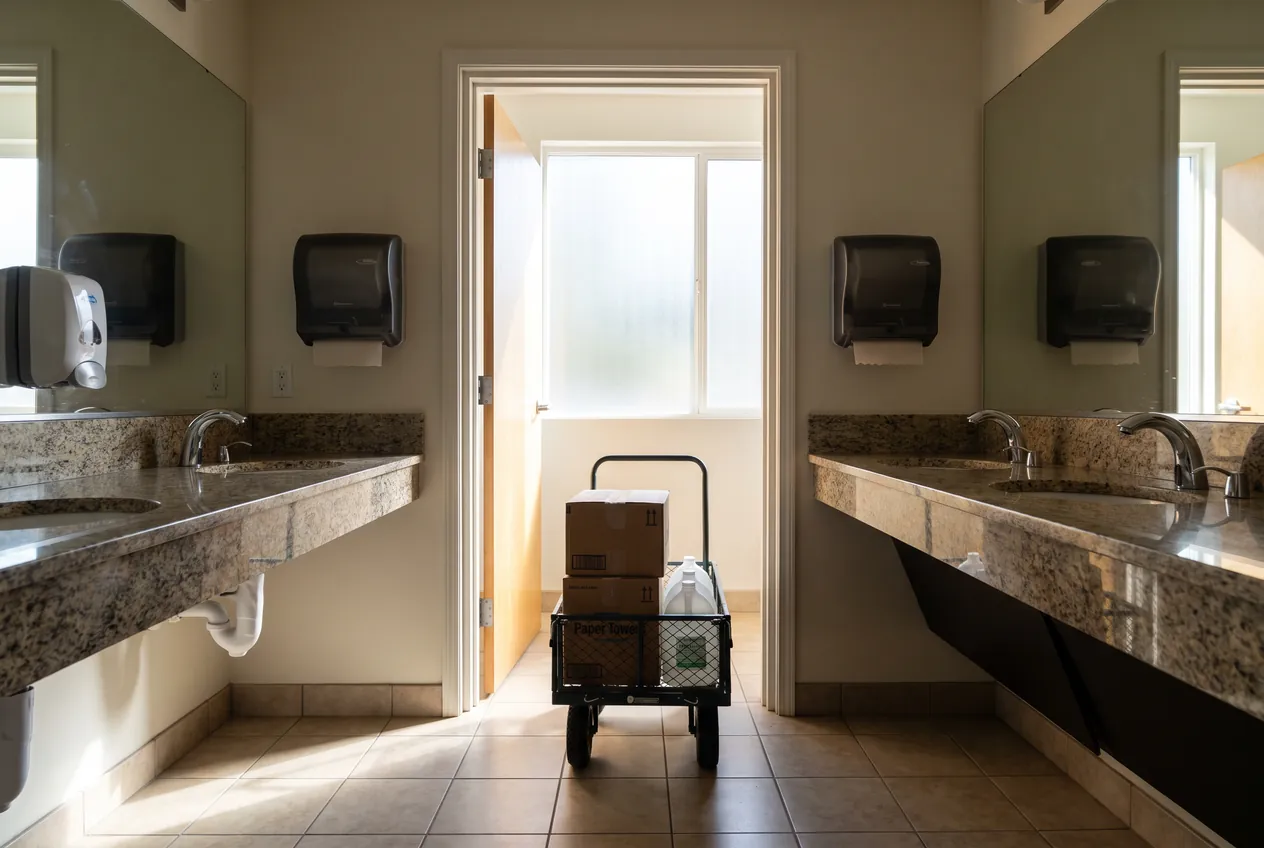
- Restroom checks, quick cleaning and restocking on a set round
- Lobby and entrance floors, mats and door glass
- Spill response anywhere in the building
- Trash and recycling runs as bins fill
- Conference room resets between meetings
- Break room and kitchen tidying after peak use
- Wiping touch points such as handles, buttons and rails
- Elevator cabs, doors and interior panels
- Small requests from tenants or the property manager
A sample porter round
Most porters follow a loop that repeats through the shift, with extra stops at the times a building gets busiest. Here is how a round might move through a full day in a multi-tenant office building. Adjust it to match your own peak hours and problem spots.
| Part of the day | Where the porter focuses |
|---|---|
| Opening | Entrances, mats, lobby glass and elevator cabs before staff arrive |
| Mid-morning | First full restroom round, conference rooms, trash runs |
| Lunch | Break rooms, kitchens and the restrooms nearest them |
| Early afternoon | Second restroom round, spills and touch points |
| Late afternoon | Lobby floors, entrance glass, trash and recycling ahead of the night crew |
Which buildings use a day porter
Porters pay off wherever traffic outruns a nightly clean. Multi-tenant office buildings use them to keep shared restrooms and lobbies presentable for every tenant. Medical buildings use them because waiting rooms and restrooms see a steady stream of patients. Busy retail and buildings with lots of visitors, such as event spaces and offices with public counters, need someone to handle spills and entries as they happen.
Shifts come in two main forms. A full-day porter covers the building from opening to close. A part-day porter works a block of hours, often across the lunch rush and early afternoon, or only on the busiest days of the week. Start with the hours that cause the most trouble and expand only if the logs show gaps.
Writing a day porter job description
Whether you hire a porter directly or bring one in through a cleaning company, a written job description sets expectations. It should name the hours, the areas covered, the round order and who the porter reports to on site. Without one, porters drift toward whatever the loudest tenant asks for and the round falls apart.
- Shift hours and break times
- Areas covered, in round order
- How often each area gets checked
- Supplies the porter restocks and where they are stored
- How tenants or staff request help
- Who reviews the daily log
Keeping porter work accountable
A round schedule only works if someone can see whether it happened. Most providers use a sign-off sheet in each restroom or a digital log the porter updates at each stop. Review the log weekly at first. Missed checks usually point to a round that is too long for the hours rather than a porter who is slacking, and the fix is adjusting the route.
Set a short check-in with the provider after the first month. Compare the log against tenant requests and complaints, then move round stops to match where problems actually show up. A round built from real use holds up far better than one drawn up before the porter ever starts.
Day porters in Kansas City buildings
Winter is when porters prove their value here. From December through March, ice melt and salt get tracked into lobbies and elevators all day, and a building with nobody wiping entries can show a white film on the floor by noon. Spring storms then bring mud into entries and loading areas. A porter keeps mats, entry floors and elevator cabs ahead of it during business hours.
Multi-tenant buildings on both sides of the state line, from downtown and the Crossroads to the Johnson County office suburbs, are the most common fit. Ask for porter coverage in the same quote as nightly janitorial service so the two schedules hand off cleanly at the end of the day.