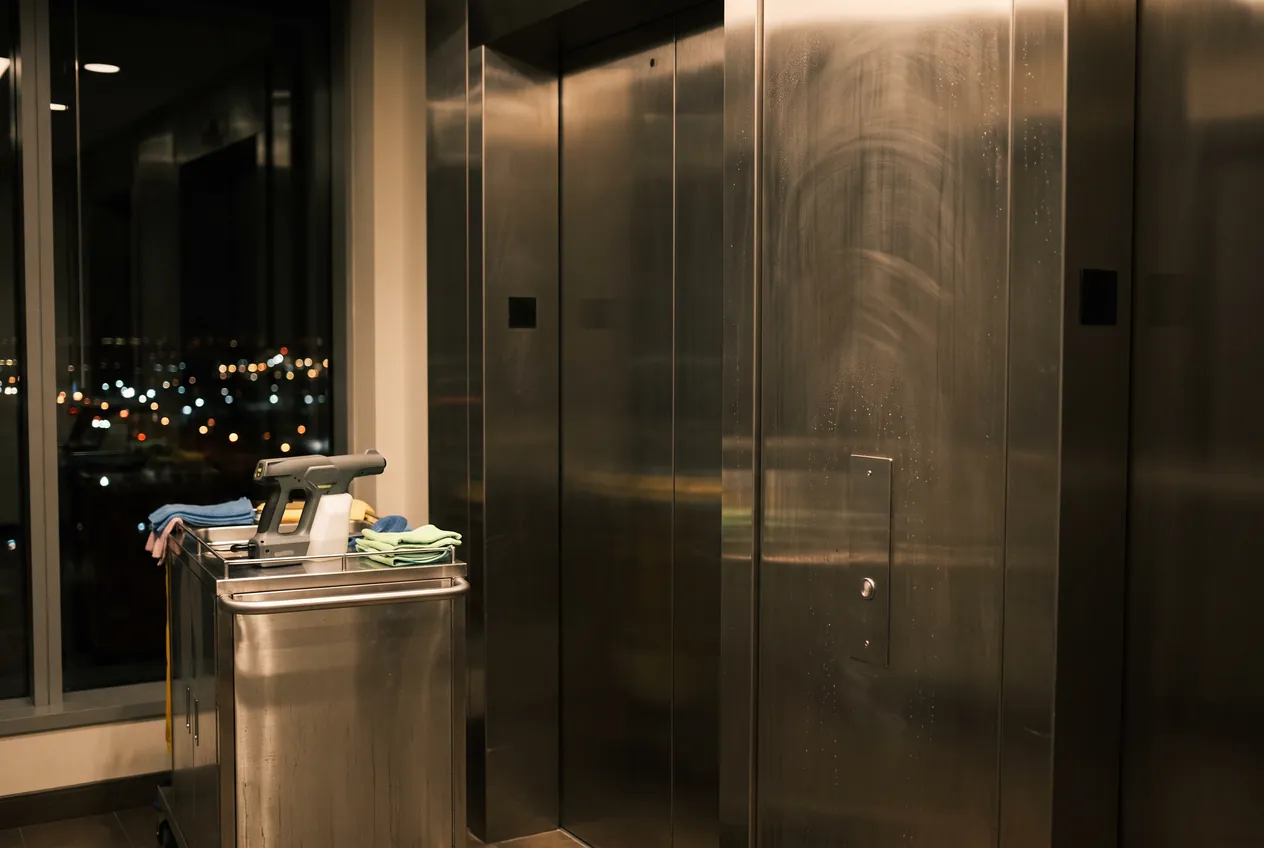
Cleaning comes first, every time. Dust, grease and grime act as a barrier, and a disinfectant sprayed over a dirty surface may never reach what it is supposed to treat. A proper visit starts by removing visible soil with a detergent or general cleaner, then applies the disinfectant as a separate step. Some products are labeled as one-step cleaner disinfectants for lightly soiled surfaces, and the label spells out when that applies. A crew that sprays and wipes in one quick motion over a sticky counter is skipping the part that matters.
Disinfectants sold for commercial use are registered with the U.S. EPA, and every label lists a contact time, often called dwell time. The product needs the surface to stay visibly wet for that full stretch to perform the way its label says. Wiping it dry too early is the most common mistake. Electrostatic sprayers put a charge on the liquid so it wraps around curved surfaces and covers large areas quickly, which helps in gyms, classrooms and break rooms. They still have to meet the same contact time, and they do not replace cleaning first.
Most of the value comes from the high-touch points: door handles and push plates, light switches, elevator buttons, restroom fixtures, faucets, shared keyboards, phones, break room appliances and reception counters. A written checklist keeps those from being missed. Routine disinfection is also not the same as biohazard cleanup. Blood spills beyond minor first aid, crime scenes, sewage backups and similar events are handled by specialist remediation companies with their own training and equipment, not by a regular cleaning crew. Know which kind of company to call before you need one.
Where Kansas City buildings ask for disinfection
Exam rooms and patient restrooms in Kansas City clinics are disinfected as part of every visit, and plenty of other buildings now want a similar routine for their shared spaces. Schools, gyms, offices with open seating and retail counters all see a steady flow of hands on the same surfaces. Cold, icy winters keep people indoors for months, with ice melt and slush tracked through entries and into restrooms. Requests come from Downtown Kansas City and the Crossroads out to Olathe, Lee's Summit and Independence, on both sides of the state line.
Most disinfection is scheduled after hours so surfaces can stay wet for the full contact time without someone wiping them or setting a coffee cup down. Some buildings add a midday pass on restrooms and door hardware, often handled by a day porter. Offices and schools sometimes book an extra visit after a stretch of absences, and buildings with several tenants may treat common areas on a different schedule from the suites.
What affects the cost of disinfection
- Size and touch points
- A small office with two restrooms is quicker than a school or gym with hundreds of shared surfaces. The number of touch points matters as much as the square footage.
- Frequency
- A one-time visit is priced differently from nightly disinfection built into a recurring cleaning plan. Adding it to existing janitorial service is often simpler than booking it as a separate job.
- Method and equipment
- Hand application with cloths and spray bottles suits detail work. Electrostatic sprayers cover large rooms faster but add equipment, and both still have to follow the label contact time.
- Product and reporting needs
- Some facilities ask for specific products, fragrance-free options or records of what was used and when. Those requests add time to the planning and to each visit.
Sample disinfection schedule
| What gets done | Frequency |
|---|---|
| Restroom fixtures and handles | Every visit |
| Door handles, push plates and switches | Every visit or daily |
| Break room counters and appliance handles | Daily |
| Elevator buttons and handrails | Daily |
| Shared desks, phones and keyboards | Daily to a few times a week |
| Electrostatic treatment of large rooms | Weekly, monthly or as needed |
Treat this as a starting point. Once the provider sees your building and learns how people use it, they tune the schedule to fit.
What the work typically covers
- Cleaning surfaces before disinfecting
- EPA-registered disinfectant used per label
- Door handles, push plates and switches
- Restroom fixtures, faucets and dispensers
- Break room counters and appliance handles
- Shared desks, phones and equipment
- Electrostatic spraying for larger areas
- Checklist of high-touch points covered
You and the cleaning provider settle the exact tasks and schedule when they put together your quote.
Where requests come from
Businesses all over the Kansas City area send us disinfection requests, from Downtown Kansas City, Crossroads, Country Club Plaza, North Kansas City, Kansas City, KS, Overland Park and beyond. See all areas.
More cleaning services in Kansas City
- Office Cleaning in Kansas City
- Janitorial Services in Kansas City
- Medical Office Cleaning in Kansas City
- Floor Care in Kansas City
- Post-Construction Cleaning in Kansas City
- Day Porter Services in Kansas City
- Commercial Carpet Cleaning in Kansas City
- Commercial Window Cleaning in Kansas City
- Commercial Pressure Washing in Kansas City