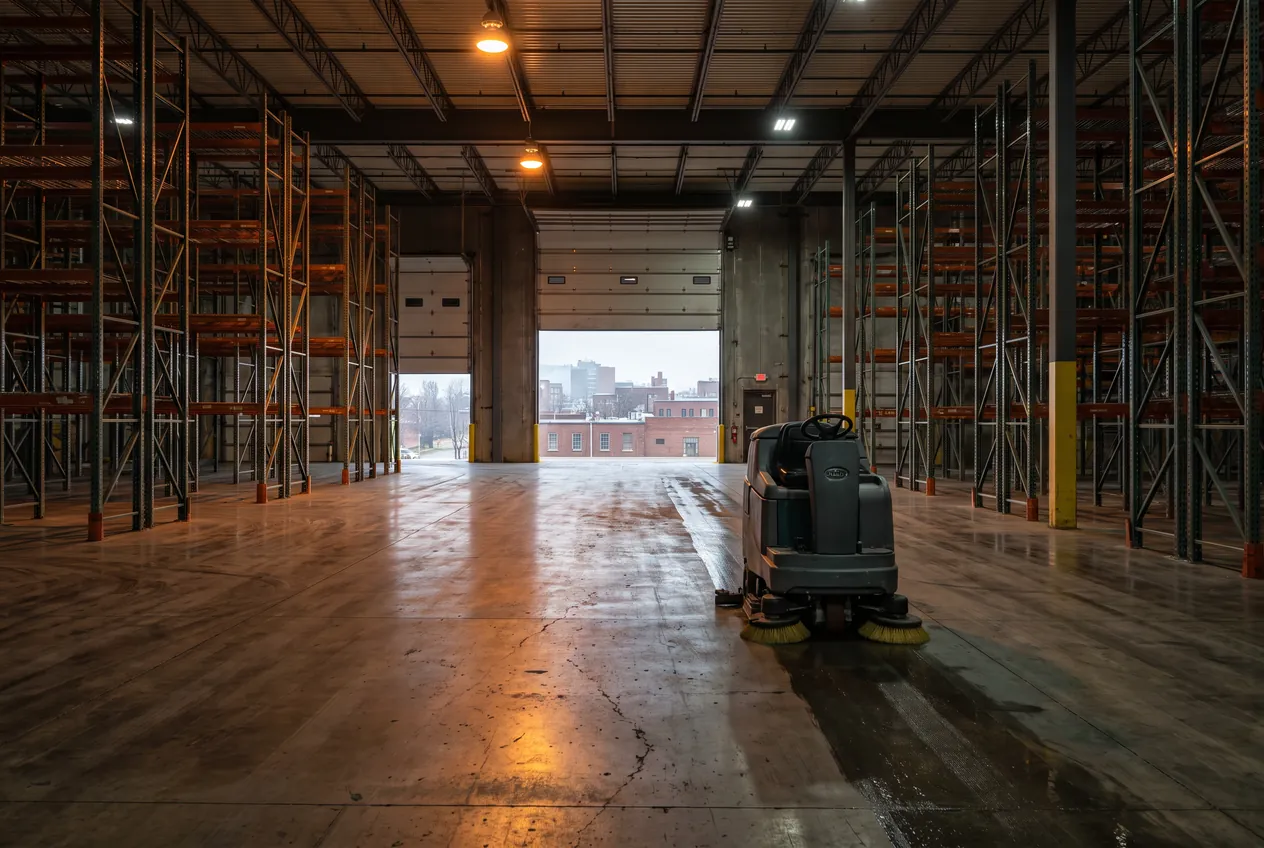
Floor work is the core of the job. Sealed or bare concrete is swept first with a ride-on sweeper to pick up dust, pallet splinters, strapping and shrink wrap, then an auto scrubber lays down cleaning solution, scrubs and vacuums the water back up in one pass. Skipping the sweep fouls the scrubber and smears grit. Tire marks and oil drips near charging stations and dock plates often need a degreaser and a second pass. Aisles between racking are tight, so the crew plans routes that keep machines clear of stored product and pick paths.
Docks collect more dirt than any other part of the building. Leaves, mud, broken pallets, stretch film and packaging scraps pile up at the doors and under levelers. Clearing that debris keeps it from spreading across the floor and keeps trailers loading safely. Federal workplace safety rules (OSHA) expect walking and working surfaces to be kept clean, orderly and free of hazards, and a clean dock is part of that. Up high, racking, beams, light fixtures and HVAC returns gather dust that drifts down onto product, so trained operators work from lifts on a planned cycle.
The office side of a warehouse needs regular janitorial care just like any workplace. Break rooms, restrooms, locker rooms and shipping offices get trash removal, surface cleaning, floor care and restocking, often nightly. The common mistake is treating the whole building on one schedule, which leaves restrooms dirty or floors underserved. Another is a crew that does not know the site rules. Ask how the provider handles forklift traffic, required PPE, safety orientation and marked pedestrian lanes. In buildings running around the clock, cleaning goes zone by zone so work never stops.
Kansas City warehouse floors and docks, season by season
Distribution space runs from near the river out to the Kansas side of the metro, and Kansas City weather reaches every dock door. Spring storms push mud and wet leaves into loading areas, where trucks and forklifts carry them deep into the aisles. From December through March, ice melt and salt come in on tires and boots, leaving a gritty white residue that wears down floor sealer and makes concrete slick. Hot summers bring dust through open doors on busy days. Many operators ask for more frequent dock and entry scrubbing in winter and a full floor reset once spring arrives.
Scheduling depends on shift patterns. Single-shift buildings are usually cleaned in the evening or on weekends, when the floor is empty. Two- and three-shift operations clean in zones, closing a few aisles at a time or working during shift changes and lunch breaks. High dusting is often booked for a weekend or a slow season. Requests come from warehouses in North Kansas City, Kansas City, KS, Lenexa, Olathe and Independence, among other parts of the metro.
Sample warehouse cleaning schedule
| What gets done | Frequency |
|---|---|
| Floors swept and auto scrubbed | Daily to weekly, by traffic |
| Dock and loading area debris cleared | Daily or each shift |
| Break rooms, restrooms and locker rooms | Nightly or each shift |
| Shipping and warehouse offices | Several times a week |
| Spot degreasing at chargers and dock plates | Weekly or as needed |
| High dusting of racking, beams and lights | Every 3 to 12 months |
| Deep floor scrub and reseal check | Once or twice a year |
Treat this as a starting point. Once the provider sees your building and learns how people use it, they tune the schedule to fit.
What the work typically covers
- Ride-on sweeping and auto scrubbing
- Dock door and loading area cleanup
- Shrink wrap and pallet debris removal
- Break room and locker room cleaning
- Restroom cleaning and restocking
- Warehouse office janitorial care
- High dusting from lifts
- Spot degreasing of oil and tire marks
You and the cleaning provider settle the exact tasks and schedule when they put together your quote.
What changes the price of warehouse cleaning
- Floor area and layout
- Open concrete goes quickly with a big scrubber, while narrow racking aisles, mezzanines and many small rooms slow the machines down and add hand work.
- Operating hours
- A single-shift building with an empty floor at night is easier to clean than a round-the-clock operation, where the crew works zone by zone around forklifts and staff.
- Height and access
- High dusting needs lifts, trained operators and time to move along the racking. Ceiling height, how much product sits on top racks and whether lifts are on site all matter.
- Floor condition and debris
- Heavy oil drips, tire marks, years of grime or lots of packaging waste take longer to clear. A building that has not been deep cleaned in a while usually needs a catch-up visit first.
Related services in Kansas City
- Janitorial Services in Kansas City
- Floor Care in Kansas City
- Day Porter Services in Kansas City
- Commercial Window Cleaning in Kansas City
Cleaning for other types of business in Kansas City
- Restaurant Cleaning in Kansas City
- Church Cleaning in Kansas City
- School and Daycare Cleaning in Kansas City
Where requests come from
Businesses all over the Kansas City area send us warehouse cleaning requests, from Downtown Kansas City, Crossroads, Country Club Plaza, North Kansas City, Kansas City, KS, Overland Park and beyond. See all areas.